
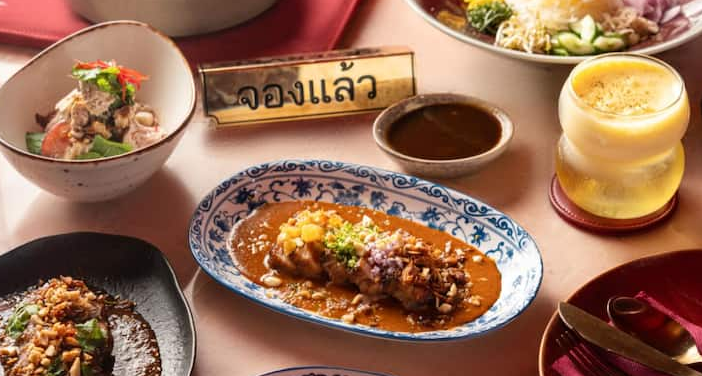
A new culinary direction has been introduced at BANNG Mumbai, where the menu has been reworked to highlight the Chinese influence embedded within Thai cuisine. Through this shift, a more layered and historically informed identity has been presented, with the restaurant moving beyond a conventional Thai dining format and towards a narrative-led approach. The revised menu has been developed under the direction of Garima Arora, Chef-Partner at BANNG, in collaboration with Chef Manav Khanna, and the repositioning has been aligned with a larger hospitality trend in which cultural crossovers are increasingly being brought into focus.
The concept has been built around the idea that Thai cuisine has not evolved in isolation. Instead, it has been shaped over time by migration, exchange, and urban food cultures, especially those associated with areas such as Bangkok’s Chinatown. This influence has not been treated as an external addition, but as an integral part of how Thai food has come to be understood in everyday dining. It has been suggested through the menu design that Chinese culinary methods and formats have long existed within Thai cuisine, even if they have not always been explicitly acknowledged.
Particular emphasis has been placed on dumplings, which have been positioned as the strongest expression of this culinary overlap. A wide range of formats, including wontons, shumai, rice rolls, and xiao long bao, has been introduced. These have been supported by in-house methods such as fresh dough rolling, while selected items have been paired with sauces shaped around Thai flavour preferences. Through this section, a bridge has been created between Chinese technique and Thai taste familiarity.
Beyond dumplings, the same influence has been extended across stir-fries, soups, salads, and curries. Wok-based cooking, the use of ginger, and the layering of sweet, sour, spicy, and herbal notes have been used to reinforce this blended culinary identity. At the same time, continuity has been maintained through seafood dishes, rice mains, and the continued in-house preparation of fresh coconut milk, which has helped preserve the restaurant’s Thai foundation.
The menu has also been expanded to serve broader dining occasions. Rice bowl formats have been added, desserts such as bingsu have been introduced, and the beverage programme has been redesigned to support food pairings across courses. Through these additions, greater range has been created without weakening the core narrative.
Overall, a clear positioning move has been made by BANNG Mumbai. By bringing Thai-Chinese culinary intersections into sharper focus, a niche space has been claimed within premium dining, where authenticity, familiarity, and innovation have been made to coexist.