
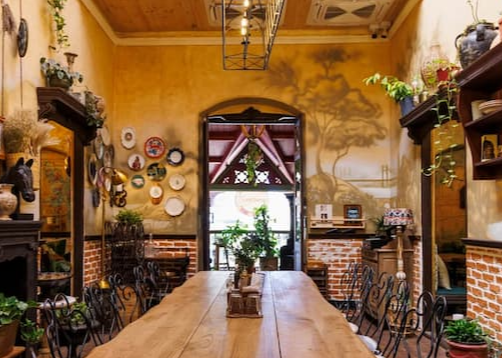
A heritage-led café format is being introduced to Mumbai through the opening of Everhome Café in Ranwar Village, Bandra West. The new dining space is being operated from a restored 130-year-old bungalow that had previously been used as a filming location for several Bollywood projects. A longer-stay, all-day consumption model is being positioned at the centre of the concept, with the property being used to create a setting that feels distinct from the pace of the city.
A broader shift in urban food and beverage development is also being reflected through the launch. Continued interest in adaptive reuse of heritage properties for hospitality formats in Mumbai is being highlighted by the source material. Distinctive architecture, flexible seating, and daypart-based menu planning are being combined by operators in order to attract guests who are willing to spend more time within cafés rather than use them only for short transactions.
The restored bungalow has been preserved with limited structural alteration. Original features such as wooden frames, arched doorways, cast iron railings, and aged fixtures have been retained by Everhome Café as part of the property’s visual identity. A glass skylight has been added to open the 30-foot ceiling and allow natural light to enter the central dining area, with the heritage character of the building being maintained rather than replaced.
The spatial layout has been designed to support varied usage within one address. Everhome Café has stated that 90 indoor covers have been distributed across several interconnected rooms, including a community space, a garden room, and a larger gathering section. An additional terrace with 10 seats overlooking Ranwar Village Road has also been incorporated, allowing multiple seating zones to be created for different guest needs and group sizes.
The consumer proposition has been defined around comfort and extended dwell time. Atil Pavesha, Co-Founder, Everhome Café, said, “Everhome is built to offer a pause.” That positioning has been reinforced by the company’s description of the venue as a place intended to feel warm, personal, and gradually discoverable as guests move through the house.
The menu has been structured to support repeat ordering across the day. House Rustic Bread has been used as a recurring anchor across the food offering, while the breakfast selection has been built around Turkish eggs, scrambles, omelettes, quinoa poha, paratha pockets, French toast, pancakes, overnight oats, and parfaits. A wider range of open toasts, sandwiches, small plates, salads, and mains has also been included, with dishes such as soba noodle bowls, slow-cooked keema, vindaloo, grilled chicken, and fish with rice being offered.
The dessert and beverage programmes have been developed to strengthen the all-day format. Croissants, Blueberry Almond Cake, Dark Chocolate Flourless Cake, and soft serve have been listed among the desserts, while specialty coffees infused with cinnamon, vanilla, and hazelnut have been added to the drinks range. Cold brews, smoothies, juices, kombucha, and matcha beverages have also been included to widen appeal across multiple consumption occasions.
The food philosophy has been described by the founders as familiar rather than overly complex. Dipti Gohel, Co-Founder, Everhome Café, said, “Good food is food you don’t have to think about.” The menu, according to her statement, had been shaped around food that feels natural, complete, and easy to return to, so that it sits gently within the overall atmosphere of the café.
The launch has therefore been positioned as more than a standalone opening. A heritage property has been repurposed, an all-day model has been structured, and a slower form of café engagement has been targeted within one of Mumbai’s most culturally layered neighbourhoods. In that sense, Everhome Café has been introduced not only as a dining venue, but also as an example of how hospitality formats are being reworked around architecture, mood, and time spent in place.