
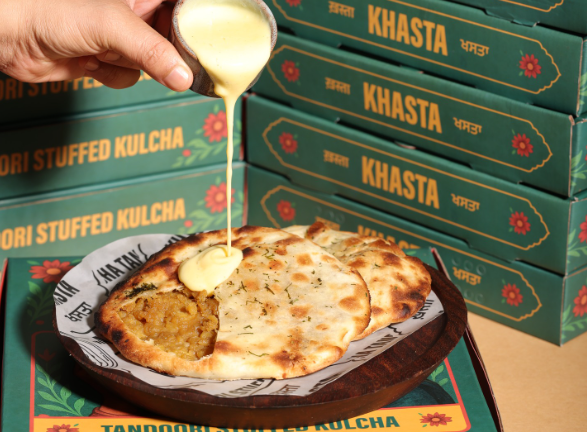
A new delivery-only food concept has been launched by Depot48, marking an expansion of its portfolio through a format that adapts traditional North Indian food for modern consumption habits. The brand, named Khasta, has been positioned as a full-meal solution built around the tandoori kulcha, a staple that has been reworked into a sealed and self-contained dish.
The concept has been developed with an emphasis on cultural familiarity rather than culinary reinvention. Traditional kulchas have been filled, sealed, and cooked in a tandoor to function as complete meals, eliminating the need for accompaniments or additional plating. This approach has been adopted to align with growing delivery-led dining preferences, where convenience and portion completeness play a critical role.
The menu has been curated to balance comfort and experimentation. Established flavour profiles associated with North Indian cuisine have been retained, while select offerings have introduced less conventional combinations. This structure has allowed the brand to cater to diners seeking familiarity, as well as those open to exploring newer interpretations within a trusted format.
Operational design has been identified as central to the concept’s execution. The kulchas have been slow-prepared to achieve crisp exteriors and layered interiors capable of holding slow-cooked fillings. The format has been optimised to ensure that texture and flavour integrity are maintained during delivery and reheating, addressing a common challenge in bread-based dishes.
The choice of the name “Khasta” has been rooted in sensory and emotional recognition. Commonly used in North Indian households, the term conveys crispness and richness, anchoring the brand within Punjabi culinary traditions despite the absence of a direct English translation.
Khasta has been positioned as an everyday dining option, suitable for home meals, informal gatherings, and periods of increased delivery demand. Rather than modernising traditional food through visual or stylistic overhauls, the concept has allowed established culinary practices to evolve organically in response to changing lifestyles. Through this delivery-first extension, a familiar food format has been adapted to meet contemporary expectations while retaining its original context and appeal.