
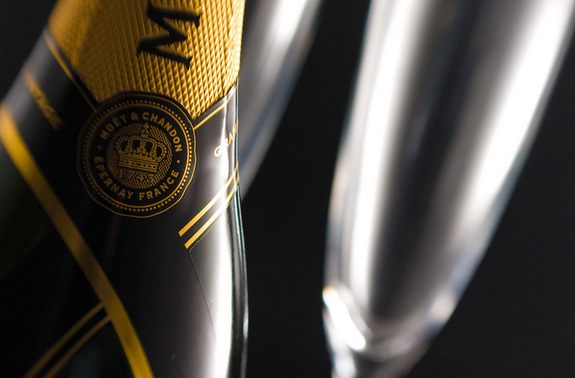
A notable development has been witnessed in India’s wine sector with the decision by Moët & Chandon to end its local wine production operations in the country after more than a decade. The move has been seen as significant because it marks a departure from the earlier strategy followed by global beverage companies, under which local production in India had been encouraged to appeal to a fast-growing base of consumers seeking premium drinks with domestic roots. A shift in approach has therefore been signalled, and attention has been drawn to what this may mean for the future of premium wine manufacturing in India.
The transition has been accompanied by the acquisition of the Chandon India winery by Sula Vineyards. It has been stated by the company that the deal has been valued at ₹200 million, or about US$2.16 million. The estate, located in Dindori in Nashik, has been described as a 19-acre property with an existing production capacity of around 450,000 litres, while expansion up to 1.3 million litres has also been made possible. In addition, a visitor centre and banqueting facilities have been included within the estate, and this has strengthened its value beyond production alone.
It has also been clarified that the Chandon brand will continue to remain in the Indian market even after the deal is completed. While production at the winery is expected to be shifted to Sula’s own labels, the “Chandon” name is to be retained. This arrangement has been viewed as an effort through which brand continuity may be maintained even as manufacturing control is transferred. Chandon had already been positioned in India as a premium sparkling wine brand produced locally and distributed across more than 20 major cities. A premium still wine, Chandon Aurva, had also been introduced domestically by Moët Hennessy India.
Strong emphasis has been placed on wine tourism in the rationale behind the acquisition. Rajeev Samant, founder and CEO of Sula Vineyards, was quoted as saying that the company saw “strong potential” in developing the Dindori property into another landmark destination. Reference was made by him to the success of Sula’s flagship wine tourism site near Gangapur Lake in Nashik, where more than 300,000 visitors are attracted every year. It was also stated by him that the newly acquired estate would play a central role in the next phase of growth for Sula’s wine tourism business.
The development has also highlighted Sula’s larger role in the Indian wine industry. The company has long been regarded as a pioneer in the country’s modern wine journey. International grape varieties such as Chenin Blanc, Sauvignon Blanc, and Riesling were introduced to Indian consumers through efforts associated with Sula, and a broad portfolio of red, white, rosé, and sparkling wines has been built over time. As a result, this acquisition has not only been interpreted as a business expansion, but also as a sign that the next chapter of India’s wine industry is increasingly being shaped by domestic leadership rather than multinational production.